
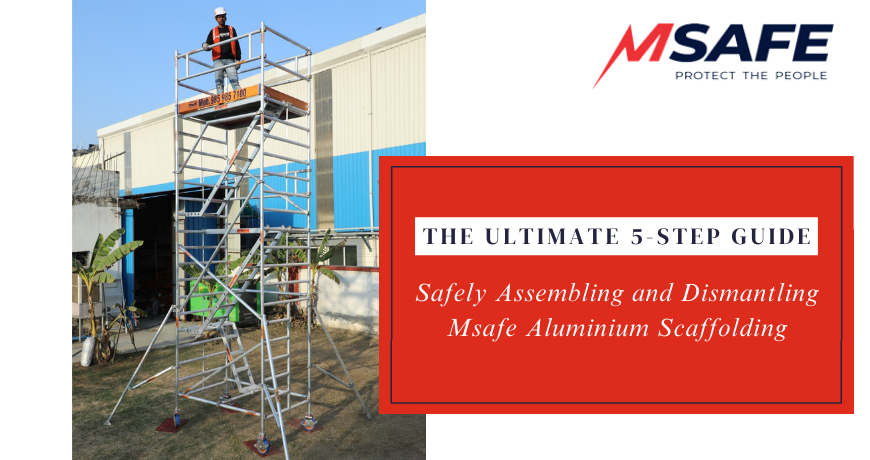
Working at height is one of the most high-risk activities across construction, industrial maintenance, warehousing, and infrastructure projects. In such environments, aluminium scaffolding is not just a support structure—it is a critical safety system. The way scaffolding is assembled, used, and dismantled directly impacts worker safety, site efficiency, and regulatory compliance.
At MSafe Group, safety is not an afterthought—it is the foundation. This detailed guide is designed to help site engineers, safety officers, contractors, and project managers understand the correct, safe, and systematic method of assembling and dismantling MSafe Aluminium Scaffolding, following industry best practices.
This is not just a checklist, but a practical on-site guide you can rely on.
Why Proper Assembly and Dismantling of Aluminium Scaffolding Is Critical?
Many site accidents related to scaffolding do not happen because of poor material quality—but due to incorrect assembly, missing safety components, or unsafe dismantling practices. Even premium-quality scaffolding can become dangerous if procedures are not followed correctly.
Proper scaffolding assembly and dismantling ensures:
A stable and secure working platform at height
Reduced risk of falls, slips, and collapses
Compliance with safety norms and audits
Longer life of scaffolding components
Smooth workflow without unplanned stoppages
MSafe Aluminium Scaffolding is engineered for strength, balance, and ease of handling. However, its true safety potential is achieved only when it is assembled and dismantled the right way.
Step 1: Pre-Assembly Planning and Safety Inspection
Before a single frame is erected, safety begins with preparation. Rushing into assembly without proper planning is one of the most common mistakes on worksites.
Inspect All MSafe Aluminium Scaffolding Components
Each component plays a vital role in the overall stability of the structure. Before assembly, carefully inspect:
Aluminium frames for bends, cracks, or deformation
Platforms for dents, damage, or slippery surfaces
Guardrails, braces, and toe boards for more safety
Locking pins, couplers, and fasteners for proper functioning
Castor wheels and base plates for stability and locking mechanisms
Only use certified, undamaged MSafe Aluminium Scaffolding components. Any defective part must be removed immediately from use.
Prepare and Secure the Work Area
Ensure the ground surface is firm, level, and load-bearing
Use base plates or adjustable jacks where required
Remove loose debris, materials, or obstructions
Barricade the assembly zone and display warning signage
Good planning at this stage prevents instability and accidents later.
Step 2: Correct Assembly of MSafe Aluminium Scaffolding Structure
Follow Approved Assembly Guidelines
Always assemble scaffolding strictly as per MSafe’s recommended instructions and approved configurations. Unauthorized modifications, makeshift adjustments, or missing components can compromise safety.
Build the Scaffold from the Ground Up
Position base plates or lock castor wheels firmly
Erect vertical frames with proper alignment
Connect horizontal and diagonal braces to maintain rigidity
Ensure each level is stable before adding the next
One of the biggest advantages of aluminium scaffolding is its lightweight nature, making handling easier. However, lightweight does not mean unsafe—every connection must be secured properly.
Step 3: Installing Platforms, Guardrails, and Safe Access
Secure Aluminium Working Platforms
Platforms are where workers stand and perform tasks, making their proper installation critical.
Place platforms evenly without gaps
Lock platforms securely to prevent movement
Use anti-slip platforms for better grip and confidence at height
Install Guardrails and Toe Boards
Fall protection is non-negotiable.
Install guardrails at all open sides and ends
Fix toe boards to prevent tools and materials from falling
These components protect not only workers on the scaffold but also people working below.
Ensure Safe Access Systems
Use built-in ladders or stairway access
Maintain clear and obstruction-free access paths
Never climb frames, braces, or guardrails
Safe access reduces fatigue, improves efficiency, and prevents unsafe climbing practices.
Step 4: Inspection, Load Management, and Safe Usage
Conduct a Thorough Pre-Use Inspection
Before allowing work to begin:
Check vertical and horizontal alignment
Confirm all braces, locks, and pins are secure
Verify that load limits are clearly understood and followed
A competent person or safety officer should inspect the scaffolding before use and at regular intervals.
Follow Safe Working Practices on Scaffolding
Do not overload platforms with materials or equipment
Avoid sudden movements or impact loads
Never move mobile scaffolding while workers are on it
Always use appropriate PPE such as helmets, safety shoes, and harnesses where required
Safe usage is as important as safe assembly.
Step 5: Safe and Systematic Dismantling of Aluminium Scaffolding
Dismantling is often treated casually—but it carries the same level of risk as assembly if not done correctly.
Dismantle in the Reverse Order of Assembly
Remove all tools, materials, and debris first
Start dismantling from the topmost level
Remove guardrails, platforms, and braces carefully
Lower components safely—never throw or drop them
Maintain Safety and Organization During Dismantling
Restrict access to the dismantling area
Stack dismantled components neatly
Inspect parts for damage before storage or reuse
Proper dismantling ensures worker safety and protects scaffolding components from unnecessary damage.
Common Scaffolding Safety Mistakes to Avoid
Despite clear guidelines, some mistakes are frequently observed on sites:
Skipping inspections due to time pressure
Using scaffolding on uneven or unstable ground
Missing guardrails or toe boards
Overloading platforms beyond recommended limits
Allowing untrained or unauthorized personnel to handle scaffolding
Avoiding these errors significantly improves safety performance and site discipline.
Why Is MSafe Aluminium Scaffolding The Right Choice?
MSafe Aluminium Scaffolding is designed to meet the demands of modern worksites where safety, speed, and reliability matter.
Key advantages include:
High-strength, lightweight aluminium construction
Quick and easy assembly with secure locking systems
Compliance with industry safety standards
Excellent durability and long service life
When combined with proper procedures and trained manpower, MSafe scaffolding creates a safer, more productive working environment.
Safety Is a Process, Not a Product
Safe assembly and dismantling of aluminium scaffolding is not optional—it is a responsibility. By following this detailed 5-step guide for MSafe Aluminium Scaffolding, organizations can reduce risks, protect their workforce, and maintain compliance across projects.
At MSafe Group, we believe that safety is built step by step—just like scaffolding.
For certified MSafe Aluminium Scaffolding solutions, on-site safety training, or expert guidance, connect with MSafe Group today and build safer worksites with confidence.
For any further insights about aluminium scaffolding you can refer to the following blogs: