
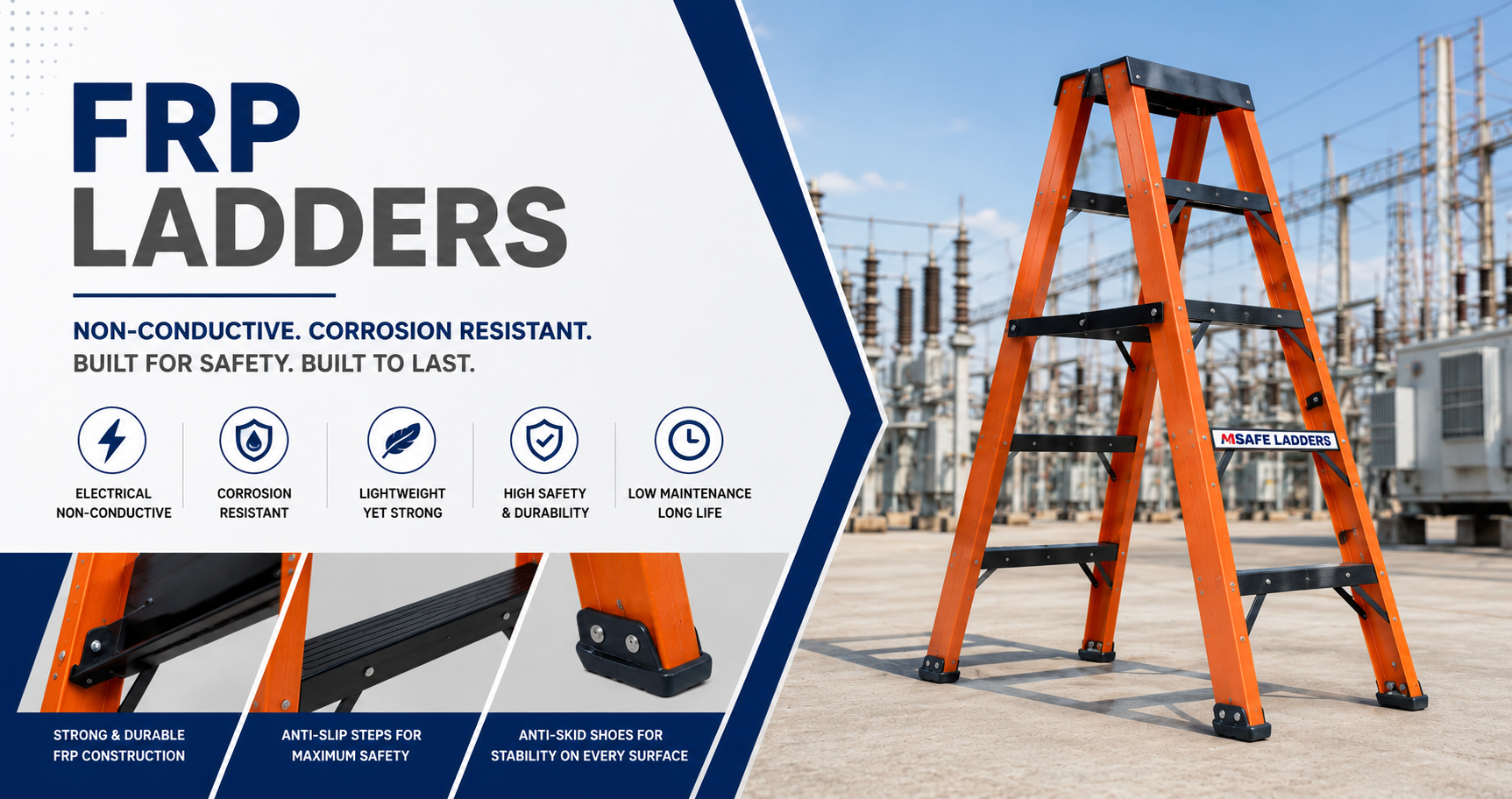
FRP (Fiberglass Reinforced Plastic) ladders are safer for electrical and industrial work because they are non-conductive, corrosion-resistant and don't rust or spark near chemicals or live wires. Unlike Aluminium or steel ladders, FRP won't conduct electricity, making it the standard choice for electricians, utility workers and industrial plants.
_
1. Non-Conductive Material Prevents Electrocution
This is the biggest reason FRP ladders exist. Metal ladders conduct electricity — a serious hazard when working near live wires, transformers or electrical panels. FRP is electrically insulating, so even accidental contact with a live circuit doesn't turn the ladder into a conductor.
Anyone working on:
Electrical installation or repair
Power line maintenance
Panel and switchgear work
should avoid metal ladders entirely and use FRP instead.
_
2. Resistant to Corrosion and Chemicals
Industrial sites often involve exposure to moisture, chemicals or corrosive fumes. Unlike steel, FRP doesn't rust and unlike aluminium, it doesn't corrode when exposed to acidic or alkaline substances. This makes it ideal for:
Chemical plants and refineries
Manufacturing units with high humidity
Outdoor industrial sites exposed to weather
_
3. Lightweight Yet Strong
FRP ladders offer a strong strength-to-weight ratio. They're easy to carry and reposition on site, without compromising load-bearing capacity — important for workers who move between job locations throughout the day.
_
4. Long Service Life with Low Maintenance
Because FRP doesn't rust or degrade like metal, it holds up longer under repeated industrial use. There's no need for anti-rust coating or frequent structural checks, which lowers long-term maintenance costs.
_
5. Compliant with Safety Standards
Quality FRP ladders are manufactured to meet electrical safety and industrial standards, with anti-slip steps, secure locking mechanisms and UV-resistant coating for outdoor durability.
_
When Should You Choose FRP Over Metal?
Choose FRP ladders if your work involves:
Any proximity to live electrical systems
Chemical or corrosive environments
Frequent outdoor or humid-site use
Choose aluminium instead only for general, non-electrical indoor or light-duty tasks where conductivity isn't a risk.
_
Frequently Asked Questions
Are FRP ladders completely non-conductive?
Yes, FRP ladders are made from fiberglass-reinforced plastic, which does not conduct electricity, unlike aluminium or steel ladders.
Do FRP ladders rust over time?
No, FRP does not rust or corrode, even in humid or chemical-exposed environments, making it more durable than metal ladders in such conditions.
Are FRP ladders heavier than aluminium ladders?
FRP ladders are slightly heavier than aluminium but still lightweight enough for regular industrial and electrical use.
Work Safely with Certified FRP Ladders
MSafe Group manufactures FRP ladders built for electrical safety and industrial durability, backed by quality certification and Pan-India availability.
Explore our FRP ladder range or get in touch for the right fit for your site.