Working on elevated platforms is a daily reality across construction sites, industrial plants, warehouses, and maintenance projects. Whether it’s aluminium scaffolding, mobile towers, aluminium or FRP ladders, working at height always carries inherent risks. Most serious accidents don’t happen due to equipment failure alone—but because of human errors and unsafe practices that can be avoided by following safe practices.
At MSafe Group, safety begins with awareness. As a leader in aluminium scaffolding manufacturers in India, MSafe Group also supports projects through aluminium scaffolding rental in India and complete aluminium scaffolding systems for construction, ensuring safe access solutions across diverse industries. This blog highlights the five most critical mistakes that must be avoided when working on elevated platforms, along with practical guidance to help create safer worksites and stronger safety culture.
Why Safety on Elevated Platforms Cannot Be Compromised?
Across India’s fast-growing construction and infrastructure sector, elevated platforms and aluminium scaffolding systems for construction are widely used for efficiency and flexibility. However, without strict safety discipline, even the best scaffolding solutions can become hazardous.
Falls from height remain one of the leading causes of serious injuries and fatalities at worksites worldwide. Elevated platforms are designed to provide safe access—but only when they are used correctly.
Common contributing factors to accidents include:
Poor planning and rushed execution
Improper platform setup
Ignoring load limits and safety accessories
Lack of training and supervision
Understanding what not to do is just as important as knowing the right procedures.
Mistake 1: Skipping Proper Inspection of the Access Equipments
One of the most common and dangerous mistakes is using elevated platforms without proper inspection.
Why Is This Risky?
Even high-quality platforms can become unsafe due to:
Loose connections or locking mechanisms
Damaged platforms or guardrails
Worn-out castor wheels or base plates
A single overlooked defect can lead to platform instability or collapse.
Best Practice
Inspect the platform before every shift
Check structural components, locks, and access systems
Ensure guardrails and toe boards are securely installed
A few minutes of inspection can prevent life-altering accidents.
Mistake 2: Overloading the Elevated Access Platform
Every elevated platform has a specified load capacity, yet overloading remains a frequent site violation.
Why Does This Happen?
Storing excess materials on the platform
Multiple workers using a platform designed for limited load
Ignoring dynamic loads from movement or equipment
Why Is It Dangerous?
Overloading can cause:
Structural stress and deformation
Loss of balance or tipping
Sudden platform failure
Best Practice
Always follow manufacturer-recommended load limits
Distribute loads evenly
Remove unnecessary materials from the platform
Safe load management is critical to maintaining stability at height.
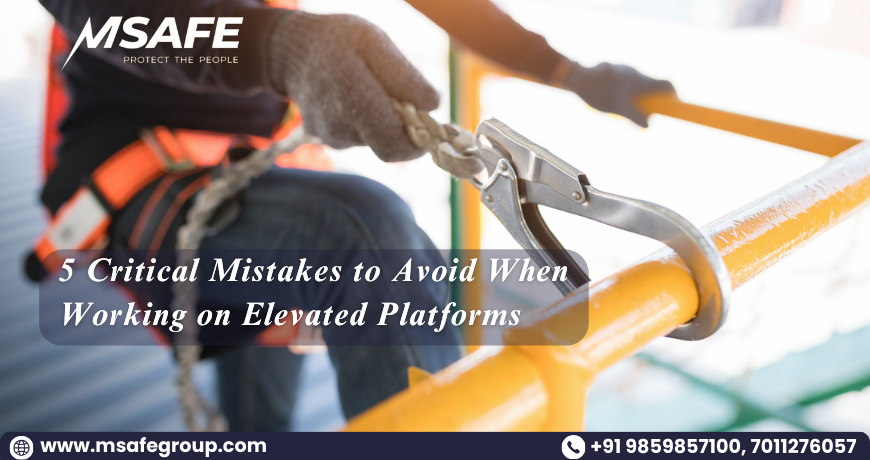
Mistake 3: Missing Guardrails and Fall Protection
Working without proper fall protection is a major safety violation and a leading cause of serious injuries.
Common Unsafe Practices
Removing guardrails for convenience
Working near open edges without protection
Not using harnesses where required
Why Is This Extremely Dangerous?
A momentary loss of balance at height can result in severe injury or fatality.
Best Practice
Ensure guardrails are installed on all open sides
Use toe boards to prevent falling objects
Wear safety harnesses where mandated
Fall protection systems exist to save lives—never compromise on them.
Mistake 4: Unsafe Access and Improper Climbing
Improper access is another critical mistake seen on worksites.
Examples of Unsafe Access
Climbing on frames, braces, or guardrails
Using makeshift ladders or supports
Carrying heavy tools while climbing
Why Does This Lead to Accidents?
Unsafe access increases the risk of:
Slips and falls
Loss of three-point contact
Sudden imbalance
Best Practice
Use designated ladders or stair access systems
Maintain clear and obstruction-free access paths
Carry tools using tool belts or hoisting methods
Safe access improves both safety and productivity.
Mistake 5: Allowing Untrained or Unauthorized Personnel
Elevated platforms must only be handled by trained and competent personnel.
Why This Is a Serious Issue
Untrained workers may:
Assemble platforms incorrectly
Ignore safety components
Misjudge risks at height
Best Practice
Ensure workers receive proper training
Allow only authorized personnel to assemble, use, or dismantle platforms
Conduct regular toolbox talks and safety briefings
Training transforms safety rules into safe habits.
How MSafe Helps Create Safer Elevated Access Solutions?
As a leading aluminium scaffolding manufacturer in India, MSafe Group provides end-to-end access solutions tailored to modern site requirements.
MSafe Group is committed to advancing work-at-height safety through:
High-quality aluminium scaffolding and access solutions designed and manufactured in India
Safety-first design and certified components
Flexible aluminium scaffolding rental in India for short-term and long-term project needs
On-site safety training and expert guidance
A continuous commitment to compliance, best practices, and EN Standards that define global safety benchmarks.
When the right equipment is combined with the right behavior, safety becomes a standard—not an exception.
Safety Is About What You Avoid
Most accidents on elevated platforms are preventable. By avoiding these five critical mistakes, organizations can significantly reduce risks, protect their workforce, and maintain a strong safety culture.
At MSafe Group, we believe that true safety lies not just in what you do—but in the mistakes you consciously avoid.
For certified elevated platform solutions, aluminium scaffolding systems for construction, or aluminium scaffolding rental in India, connect with MSafe Group — a reliable aluminium scaffolding manufacturer in India — and take safety to the next level.