
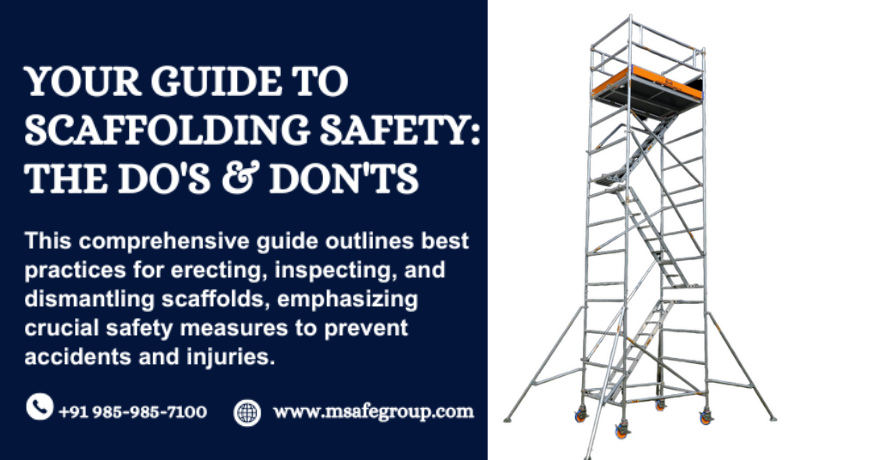
Scaffolding Safety in the Construction Industry
Scaffold safety is a critical concern in the construction sector. Each year, thousands of workers are injured in scaffolding-related incidents, many of which result in severe injuries or even fatalities. According to OSHA estimates, approximately 4,500 such injuries occur annually, costing the industry over $90 million and causing significant productivity losses.
These alarming figures highlight the urgent need for strict adherence to scaffolding safety regulations and increased awareness among workers.
Understanding Scaffolding Systems
Modular Scaffolding
Also known as system scaffolding, modular scaffolding consists of pre-assembled vertical and horizontal components that connect in a fixed pattern. This design ensures quick assembly and structural stability.
Suspended Aluminium Scaffolding
This type is commonly used in high-rise buildings where ground-based scaffolding is impractical. Platforms are suspended from the top of a structure using ropes or cables.
Mobile Aluminium Scaffolding
Mobile scaffolding is equipped with caster wheels, allowing it to be easily moved around a job site. It is widely used for tasks such as painting and plastering.
Importance of Scaffolding Safety
Ensuring scaffolding safety is essential to protect workers from serious hazards, including:
Falls from height
Scaffold collapse
Injuries from falling objects
Electrical hazards from overhead power lines
Beyond physical injuries, accidents can lead to long-term disabilities, project delays, financial losses, and reduced productivity.
Non-compliance with safety standards may also result in:
Heavy fines and penalties
Legal consequences, including possible imprisonment
Increased insurance costs
Damage to company reputation
Key Safety Guidelines for Scaffolding
1. Continuous Improvement and Reporting
Creating a culture of safety is vital. Workers should be encouraged to report hazards and provide feedback. An easy and accessible reporting system should be implemented on all job sites.
2. Safe Use of Mobile Scaffolding
Always lock caster wheels when the scaffold is in use
Do not move the scaffold while workers or materials are on it
Ensure the structure is stable before starting work
3. Weather Precautions
Avoid using scaffolding in bad weather conditions such as high winds or storms
High winds can cause mobile scaffolds to topple, leading to serious injuries
Workers should be trained to identify and respond to unsafe weather conditions
4. Proper Movement of Mobile Towers
When relocating mobile scaffolding:
Ensure the platform is completely empty
Lower the height to a maximum of 4 meters
Check for overhead obstacles
Release stabilizers and carefully push or pull from the base only
After positioning, lock wheels and reset stabilizers before use
5. Ground Stability
Always ensure the ground is level before erecting scaffolding
Uneven surfaces can compromise stability and increase risk
Fall Protection Requirements
A fall protection system is mandatory when working at heights of 10 feet or more.
Essential Safety Measures
Install guardrails around all open sides of scaffolding
Use personal fall arrest systems such as:
Safety harnesses
Lanyards
These systems help prevent falls and minimize injury in case of accidents.
Additional Safety Considerations
Load Capacity Compliance
Ensure scaffolding is not overloaded beyond its rated capacity.
Training and Competency
Workers must receive proper training in scaffold use, hazard identification, and emergency response.
Inspection and Maintenance
Regular inspections should be conducted by a competent person to identify and fix potential issues.
Project-Specific Assessment
Not all tasks require scaffolding. Each project should be evaluated individually to determine the safest and most appropriate setup.
Conclusion
Scaffolding safety is a shared responsibility that requires strict adherence to guidelines, proper training, and continuous improvement. By implementing these safety measures—ranging from fall protection systems to regular inspections and safe handling practices—construction sites can significantly reduce the risk of accidents and injuries.
Prioritizing safety not only protects workers but also ensures smoother project execution, improved productivity, and long-term business success.