
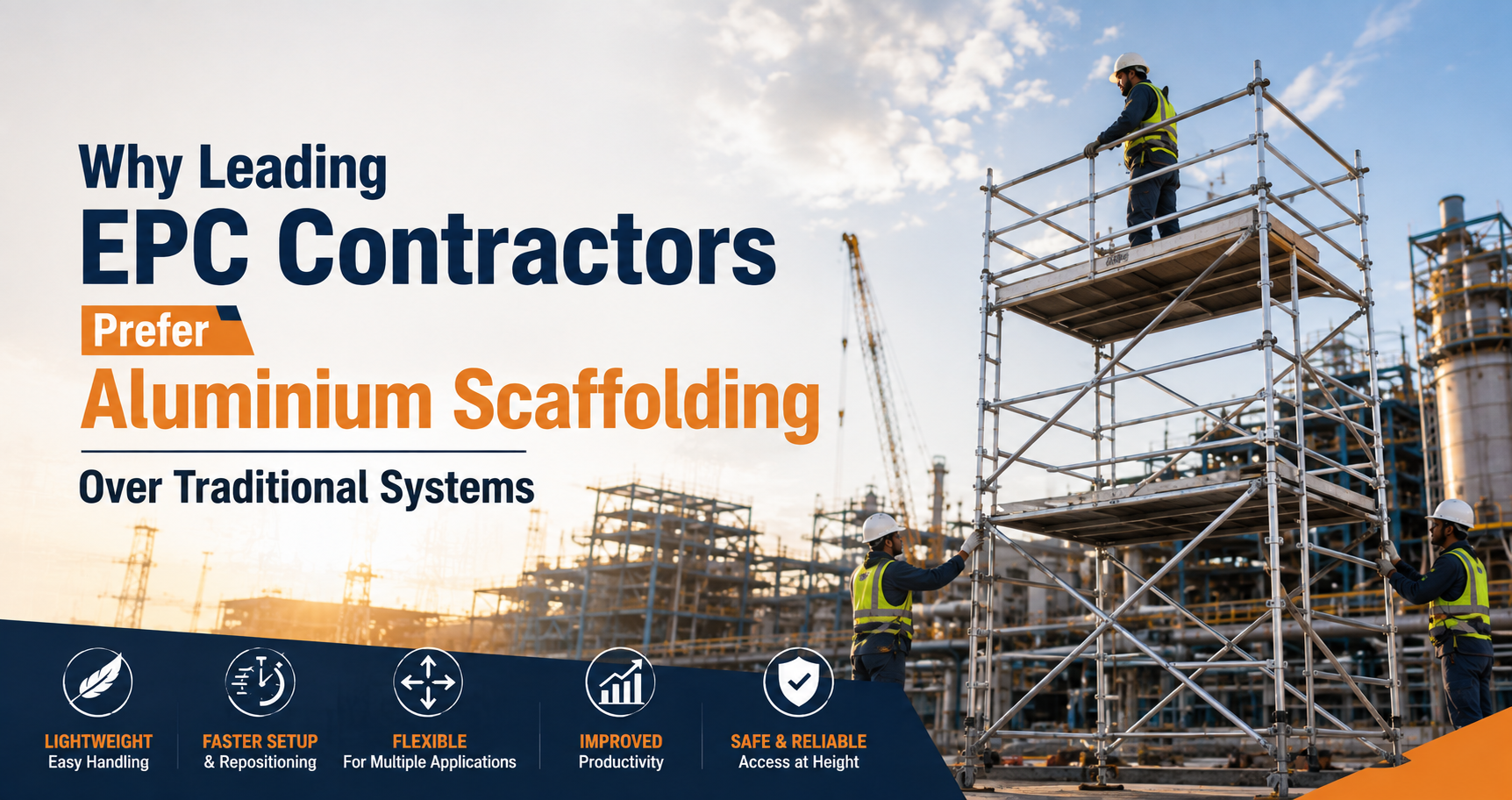
For EPC contractors, completing projects on time requires more than efficient planning. Every aspect of site execution—from material handling to worker access—can influence productivity and project timelines.
This is where Aluminium scaffolding is becoming an increasingly practical choice for modern construction, industrial and infrastructure projects.
Compared with heavier traditional scaffolding systems, aluminium solutions offer a combination of lightweight handling, easy mobility and flexible application, making them particularly useful for projects where access requirements change frequently.
Why Are EPC Contractors Choosing Aluminium Scaffolding?
1. Lightweight Means Easier Handling
Aluminium scaffolding is significantly lighter than traditional steel systems. This makes components easier to carry, assemble, dismantle and reposition.
For large EPC projects with multiple work areas, reducing the effort required to move access equipment can help teams work more efficiently.
2. Faster Movement Between Work Areas
EPC projects often involve several activities taking place at different locations. Scaffolding may need to be shifted as work progresses.
Lightweight aluminium systems can be easier to transport and reposition, making them suitable for applications where frequent movement is required.
3. Supports Faster Project Execution
Workers need reliable access to elevated areas for installation, finishing, inspection and maintenance activities.
By providing convenient access and flexible working platforms, the right aluminium scaffolding system can help teams carry out their tasks efficiently and reduce unnecessary delays associated with equipment movement.
4. Flexible for Different Applications
One of the major advantages of aluminium scaffolding is its versatility.
Depending on project requirements, it can be used for:
Construction and finishing work
Electrical and MEP installation
Industrial maintenance
Painting and inspection
Facility management
Repair and renovation
This makes aluminium scaffolding useful across different stages of an EPC project.
5. Practical for Maintenance and Industrial Work
EPC contractors are often involved in projects where access is required even after the main construction phase is completed.
Aluminium scaffolding can provide a convenient solution for temporary access during equipment maintenance, inspection, electrical work and other activities where workers need to reach elevated areas.
Where Does Aluminium Scaffolding Deliver the Most Value?
Construction & Finishing
For painting, installation, ceiling work and finishing activities, lightweight scaffolding can make it easier to access different sections of a building or structure.
Industrial Projects
Industrial facilities often require temporary access for maintenance, inspection and equipment-related work. Aluminium scaffolding can be useful where equipment needs to be moved between different work areas.
Infrastructure & Facility Maintenance
From commercial buildings to large facilities, maintenance teams may require temporary access at different heights. Portable aluminium scaffolding can offer a flexible solution for such applications.
Aluminium Scaffolding vs Traditional Systems: Which Should You Choose?
The right choice depends on the application.
Aluminium scaffolding is a strong option when you need:
Lightweight equipment
Easy transportation and repositioning
Flexible access solutions
Frequent movement between work areas
Efficient handling during assembly and dismantling
For applications requiring very high load capacity and heavy-duty structural support, traditional steel scaffolding may be more appropriate.
Therefore, the decision should be based on factors such as working height, load requirements, site conditions, project duration and frequency of movement.
Choosing the Right Aluminium Scaffolding Supplier
For EPC contractors, product quality is only one part of the decision. The supplier should also be able to understand project requirements and provide suitable solutions.
Before choosing an aluminium scaffolding manufacturer or supplier, consider:
Product quality and specifications
Available scaffolding configurations
Platform capacity and working height
Installation support
Rental and purchase options
Delivery capabilities
User training and technical guidance
A reliable supplier can help ensure that the selected scaffolding solution matches the project's actual requirements.
A Smarter Approach to Access at Height
Modern EPC projects require equipment that supports productivity without compromising on safe working practices. Aluminium scaffolding offers a practical combination of lightweight construction, mobility and versatility, making it suitable for many construction, industrial and maintenance applications.
The goal is not to replace every traditional scaffolding system. It is to choose the right access solution for the right application.
If your project requires a lightweight and flexible scaffolding solution, MSafe Group offers aluminium scaffolding systems for construction, industrial, infrastructure and maintenance applications, with options available for purchase and rental.
Talk to MSafe Group to discuss your project requirements and find the right aluminium scaffolding solution for your application.
Frequently Asked Questions
Why is aluminium scaffolding preferred for some EPC projects?
Aluminium scaffolding is lightweight and easier to handle, transport and reposition. These advantages can be valuable for EPC projects where workers frequently move between different work areas.
Is aluminium scaffolding suitable for industrial applications?
Yes. Aluminium scaffolding can be used for industrial maintenance, electrical and MEP work, inspection, painting and repair activities. The appropriate system should be selected based on the project's working height and load requirements.
Is aluminium scaffolding better than steel scaffolding?
Both have different applications. Aluminium scaffolding is generally preferred where lightweight handling and mobility are important, while steel scaffolding may be more suitable for heavy-duty applications requiring higher load capacity.